Salmon Fishing on the River Dee With a Ghillie: What You Need to Know
The River Dee has been fished by royalty and celebrated in more fishing memoirs than any other Scottish river. Here's how to fish it properly — with a ghillie, on the right beat, in the right season.
The River Dee drops 450 metres from the high Cairngorm plateau to the North Sea at Aberdeen. Along that descent it runs cold and clear over granite and gravel, through ancient Caledonian pine forest, through the wide pools of Royal Deeside, and finally through the city itself before it reaches the sea. Atlantic salmon that enter the Dee's mouth in late winter have spent the past two or three years feeding off the coast of Greenland. They run on memory and muscle, and they don't eat again once they cross into fresh water.
Fishing for them requires patience, knowledge, and — if you want to do it properly rather than just stand in cold water for several hours — a ghillie.
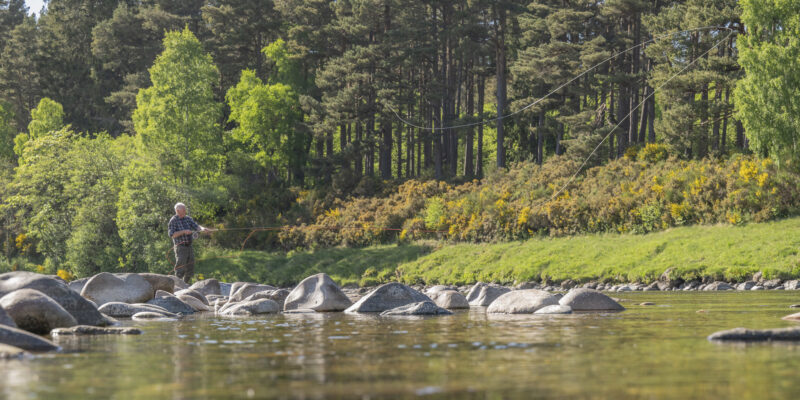 The River Dee at Glen Tanar. Fly only, all four beats. Season runs 1 March to 30 September.
What a Ghillie Actually Does
A ghillie is not a guide in the usual sense of someone who explains what you're looking at and drives you back to the hotel. A ghillie knows a specific beat of a specific river in all its conditions: where the salmon lie at different water heights, which fly to use in low summer water versus a rising autumn river, where to position a wader to cover the productive lie without disturbing it, and when to move on.
This knowledge is accumulated over years of working the same water. It is not transferable from one river to another or from one beat to the next. You can fish the Dee without one. Fishing it well is a harder proposition.
The Dee's reputation is partly the river itself and partly this tradition — of expertise attached to specific water, passed between ghillies over generations, producing a quality of angling guidance you don't encounter on rivers with no history of managed fishing.
Glen Tanar Estate: Four Beats Across 19 Kilometres of the Dee
Glen Tanar Estate operates on a scale that few estates can match: 25,000 acres of Royal Deeside — including some of the oldest Caledonian pine forest in Britain — and four distinct beats across the River Dee.
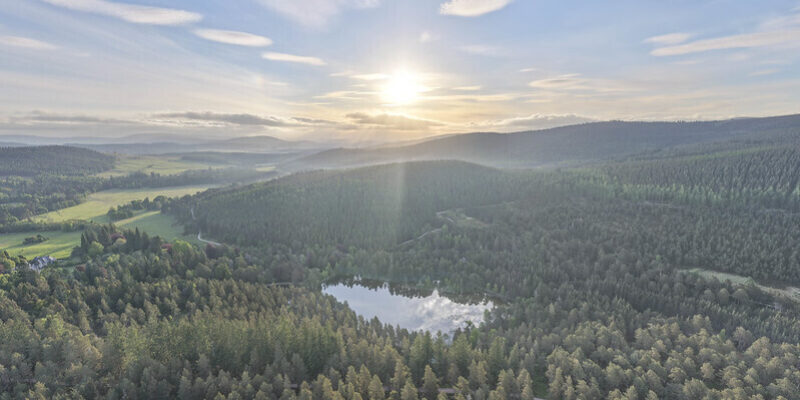 Glen Tanar from the air. 25,000 acres, four River Dee fishing beats, seven heritage self-catering cottages.
Deecastle is the prestige water — 5.2 kilometres running through the heart of Royal Deeside, double-banked, with productive pools that are recognisable to anyone who has read seriously about Dee fishing. Phillip Wood ghillies here. His speciality is traditional single-iron salmon flies, a technique with Victorian roots developed specifically for this water and still effective precisely because of it.
Waterside and Ferrar is Glen Tanar's longest beat at 6.4 kilometres of double-banked fishing entirely within the Cairngorms National Park. Length matters on the Dee: more water to search, more room to find where fish are holding on a given day.
Headinch and Cambus O'May runs over eight kilometres across both banks with four fishing huts and straightforward car access to the water. Craig McDonald ghillies this beat.
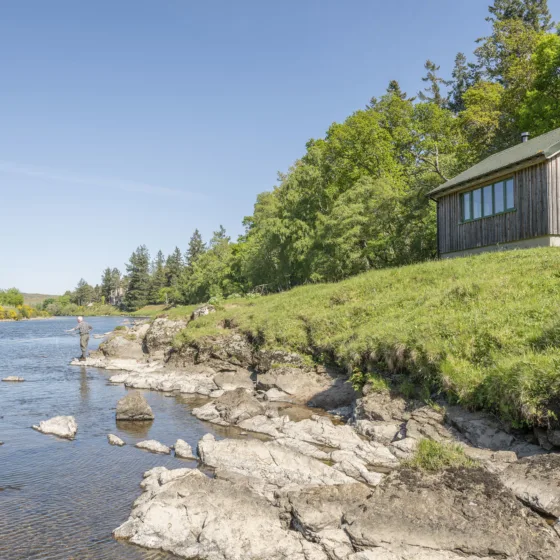 One of the four fishing huts on the Headinch and Cambus O'May beat. Car access throughout.
The season runs 1 March to 30 September. Ghillie service is included through spring (March to June) on all beats; available on some beats in summer. Day lets from £50 per rod — exceptional value for a classified beat of the Dee with an experienced ghillie. Booking is available by week, part-week, or day.
Seven heritage cottages on the estate sleep between two and six guests — Tower O'Ess (sleeps 2), Rowan Cottage (sleeps 2), Joiner's Cottage (sleeps 4), Garden Cottage (sleeps 4), Woodend (sleeps 4), West Millfield (sleeps 5), and Butler's Lodge (sleeps 6). All restored using eco-materials and decorated with works by Deeside artists. All pet-friendly and self-catering. Staying on the estate means a five-minute walk from cottage to river.
Ballogie Estate: Learning to Fish the Dee Properly
Ballogie Estate sits on the south bank of the Dee between Aboyne and Banchory — a working estate producing Scotch beef and lamb from the Nicol family's fields, with the accommodation positioned along the riverbank.
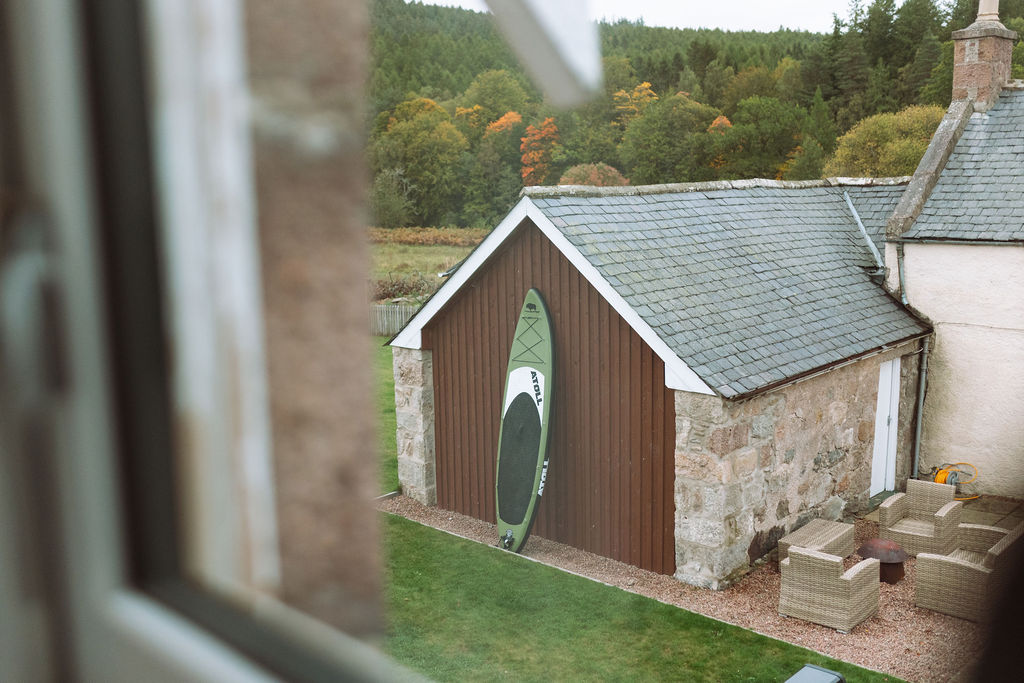 The Dee at Potarch, south bank. Ford Cottage is close enough to the water that you can see salmon jumping from the garden.
The estate partners with The Scottish Fly Fishing Co to run two structured fishing clinics each year:
- Summer clinic (May): Four days, beginners welcome, £1,080 per person
- Autumn clinic (October): Four days, intermediate and above, £1,140 per person
These are structured teaching experiences on a real beat of the Dee — four days of dedicated instruction at the point in the season when conditions are most instructive. The summer timing coincides with running fish and the water temperatures most suited to learning. The autumn clinic gives more experienced anglers access to the grilse runs that characterise September.
 Potarch Lodge at Ballogie — VisitScotland 5-star, riverbank position, sleeps 14. Hot tub included.
For accommodation, Ballogie House (sleeps 14, seven en-suite bedrooms, exclusive use, hot tub, orangery dining room, open fires — VisitScotland 5-star) works for larger fishing groups wanting the full estate experience. The beef on the table at dinner comes from the cattle in the field outside. Smaller parties will find Ford Cottage and the other riverside properties give immediate access to the water.
The other major fishing estate on the upper Dee is Invercauld near Braemar — 200 square miles with salmon fishing on the river as well as grouse and stalking. If the Dee is your reason for visiting Royal Deeside, Invercauld and Glen Tanar are the two estates that define the experience at the top end.
Practical Notes for First-Time Dee Anglers
Tackle: All fishing on Glen Tanar and Ballogie beats is fly only. Bring a double-handed salmon rod (13–15ft is standard for the Dee). Hire is available through tackle suppliers in Aboyne and Banchory. Ask the ghillie about flies on arrival — they have strong opinions, they are usually right, and ignoring them will cost you time.
Licences: Scotland requires a local District Salmon Fishery Board licence for all rod fishing on the Dee. Available online in advance or from local tackle shops.
Season timing: Spring fish (February to April) are typically larger — fresh-run, bright, and strong — but the river is cold and takes can be slow. Summer (June to August) sees more fish moving through on warming water. Autumn brings grilse: smaller fish, more numerous, and often more willing to move to a fly. September on the Dee, in good water, is hard to argue with.
Where to stay: Beyond Glen Tanar and Ballogie, the Deeside corridor has strong options at Cairnton Farm Cottages in Lumphanan and Perkhill Holiday Cottages — both within easy reach of the main fishing beats and both with the working farm context that makes Deeside worth more than just the river.
Expectations: Nobody lands a salmon every day on the Dee. A ghillie puts you in the right position and reads the river correctly; the salmon determines what happens next. The river is the point of the exercise, not the guarantee of a fish.
That — on the Dee, at least — has always been true.