"Pick Your Own Fruit in Aberdeenshire: Strawberries, Raspberries and 13 Crops at Charleton Farm"
Charleton Fruit Farm near Montrose has the widest pick-your-own selection in the region — 13 crops across the season, from asparagus in April to pumpkins in October. No booking needed. Just arrive, pick, and eat half of it before you get back to the car.
There is a particular honesty to picking fruit yourself. You spend twenty minutes crouching in a row of raspberry canes, filling a punnet and eating roughly one berry for every three you keep, and by the time you reach the checkout scales you are slightly pink around the mouth and the punnet is suspiciously light. Nobody mentions this. It is understood.
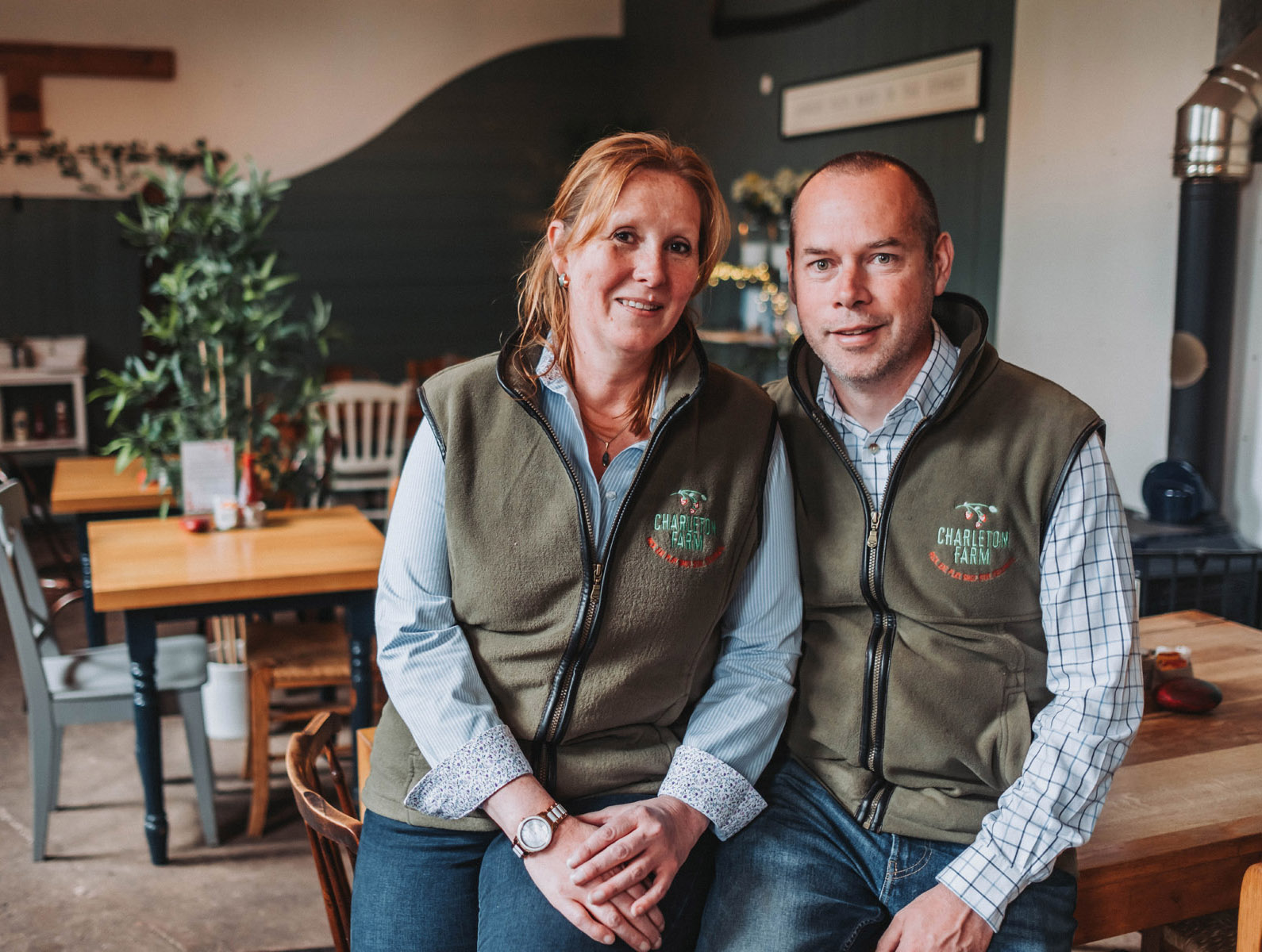
Charleton Fruit Farm near Hillside, south of Montrose, has been running pick-your-own for long enough that Graeme and Lisa McColl have clearly thought through every part of the visitor experience — including the fact that some of it will be eaten in the field. No booking required, pay by weight, and if you come home with mud on your knees, that's the point.
The Crop Calendar: What's Ready When
Thirteen crops across one season is a lot. Most pick-your-own farms in Scotland can manage strawberries and maybe raspberries on a good year. Charleton runs something closer to a full harvest schedule.
The season opens in April with asparagus — a short window of three to four weeks that rewards the people who actually plan ahead. By late May the first peas are ready, eaten raw and sweet from the pod in a way that will make you question every frozen pea you've ever eaten.
June and July are the peak months. Strawberries come first, then the standard raspberries, followed by the yellow raspberries — which look wrong and taste right, sweeter and slightly floral compared to their red counterparts. Blueberries, blackcurrants, redcurrants, tayberries, and gooseberries all have their moment across the summer, some in overlapping windows, some brief enough that you could miss them if you come back in August expecting the same rows that were ready in July.
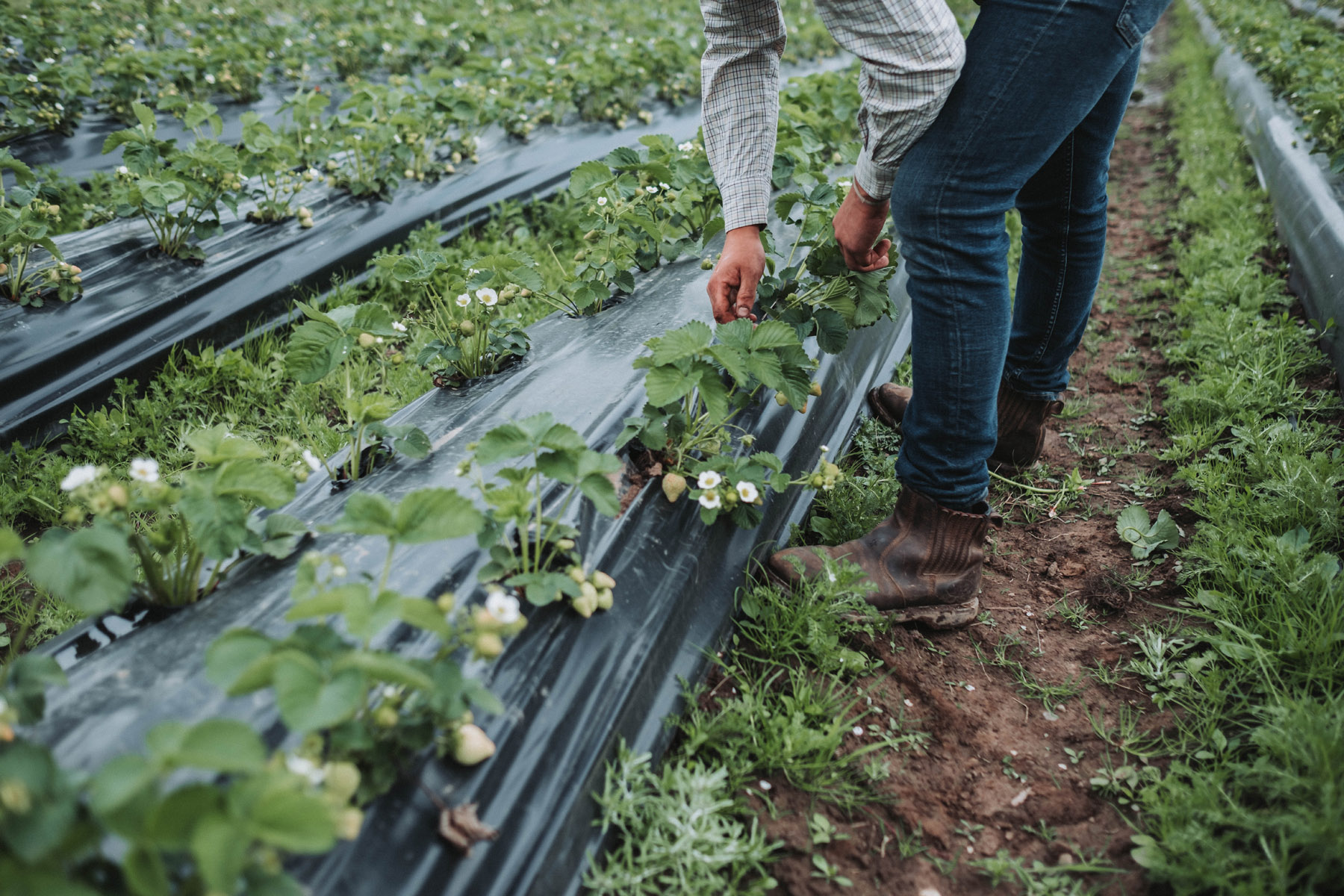
Late summer into autumn brings the orchard crops: apples, pears, plums, and cherries. These rarely feature in pick-your-own operations this far north, which is a reflection of how sheltered the Angus/Aberdeenshire coastal strip can be — warmer summers here than the inland glens, and the cold nights that concentrate flavour in soft fruit without the killing frosts that hit the valleys.
Brambles — wild-type blackberries, properly robust — round out September. Then come the pumpkins.
October: The Pumpkin Patch
The pumpkin patch at Charleton has become its own event. By October the focus shifts entirely: rows of pumpkins in varying sizes spread across the fields, the play area gets busier as half-term approaches, and the farm takes on a different character from the quiet July morning when you picked strawberries alone in the drizzle.
It is worth treating as a separate visit, not an add-on. October at Charleton is a different farm.
Practical Information
No booking required. Turn up during opening hours, collect your containers at the entrance, and pick. The weighing and payment happens at the end. Bring a bag for the drive home — punnet stacking in a warm car is optimistic at best.
What to wear: Low shoes or wellies depending on whether it's been raining (and in Aberdeenshire, it frequently has). Something you don't mind kneeling in. A hat if you're coming in July — the fields are exposed and the Scottish sun, when it appears, is more effective than it looks.
Children: The play area runs go-karts, a zip line, and a maze tunnel alongside the picking, which means adults can pick in relative peace while older children work off energy on the track. Younger children tend to find the strawberry rows compelling enough on their own — a three-year-old left alone in a strawberry row is not coming out lighter.
Christmas trees: Charleton also sells Christmas trees from the farm later in the year, for those who like the idea of sourcing the whole festive spread from one address.
Combining with Royal Deeside: Finzean and Ballogie
The drive west from Charleton into Royal Deeside takes about 50 minutes and gets progressively more beautiful as the A90 gives way to smaller roads and the Dee valley opens up. Two farms in particular are worth folding into a day out.
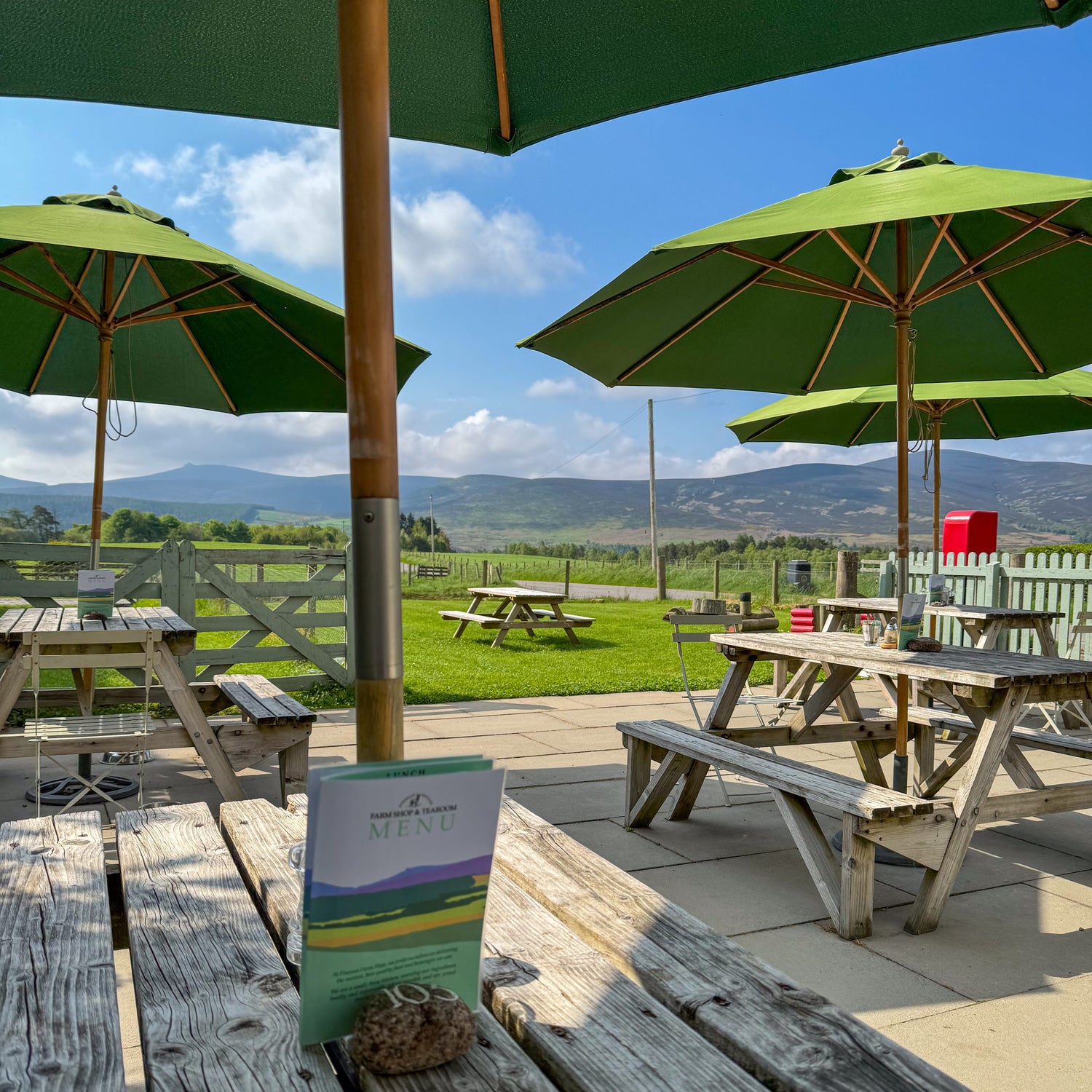
Finzean Estate sits in a wooded stretch of Royal Deeside south of Banchory, about 25 minutes from Charleton if you take the back roads through Fettercairn. The estate farm shop carries the honey Finzean is known for — produced from hives kept on the estate, raw and unhomogenised, the kind of honey that tastes of specific heather and not much else. The tea room attached to the shop is a reasonable place to stop after a morning in the berry fields.
If you're pushing further west, Ballogie Estate near Aboyne runs the Potarch Farm Café — a proper café at the old Potarch Bridge, a historic crossing point on the Dee. It sits above the river and the food is the kind of thing you want after an hour outdoors: brunch plates, good coffee, the sort of menu that doesn't try too hard but gets the basics right.

Ballogie is a working Scotch beef and lamb estate — you will see cattle in the fields on the drive in — and Potarch Lodge offers VisitScotland 5-star accommodation for anyone wanting to stay overnight in this stretch of Deeside.
For the full range of fruit picking options across the region, the activity page covers every farm currently listed on the directory.
Why Aberdeenshire Works for Soft Fruit
It sounds counterintuitive for a county more associated with grey skies than growing seasons, but Aberdeenshire's climate produces genuinely good soft fruit. Cool nights mean the sugars develop slowly and concentrate. Long summer days — Aberdeenshire sits at the same latitude as parts of southern Norway — give fruit significantly more light hours than farms in southern England, and the combination produces strawberries with actual flavour rather than the watery, forced results of polytunnels in warmer climates.
Charleton's coastal position helps too. Frost risk is lower near the sea, the wind keeps fungal pressure down, and the Angus red soil drains well after rain. None of this is luck. It is why the farm has managed to sustain 13 crops from this one site for this long.
Go before lunch on a weekday in July, when the rows are freshly picked by nobody and the strawberries are still cool from the overnight chill. That is the version of this that stays with you.