"Deer Stalking in Aberdeenshire: From Red Deer Farm Tours to Full Estate Days"
Aberdeenshire has the highest density of red deer in Britain. Whether you want to watch them from a farm gate or spend a day on the hill with a professional stalker, the region offers both — and everything in between.
Red deer are not shy animals in Aberdeenshire. They are everywhere — on the hill, in the forestry plantation edges, occasionally in the road at dusk in a way that will make you brake sharply and revise your views on wildlife. The region holds the highest density of red deer in Britain, and this is not an accident of geography. It is an outcome of land management, of habitat, and of a tradition of deer management that goes back centuries on estates like Invercauld.
The question for visitors is how to engage with that. The spectrum runs from a £25 family farm encounter at Tullynessle Deer Farm near Alford — no firearms, no crawling through heather, just you and a herd of red deer in a field — to a full guided stalk on Glen Tanar Estate or a multi-day sporting season at Invercauld in the Cairngorms. All three are legitimate. Which one is for you depends on what you're actually looking for.
Tullynessle Deer Farm: The Close Encounter
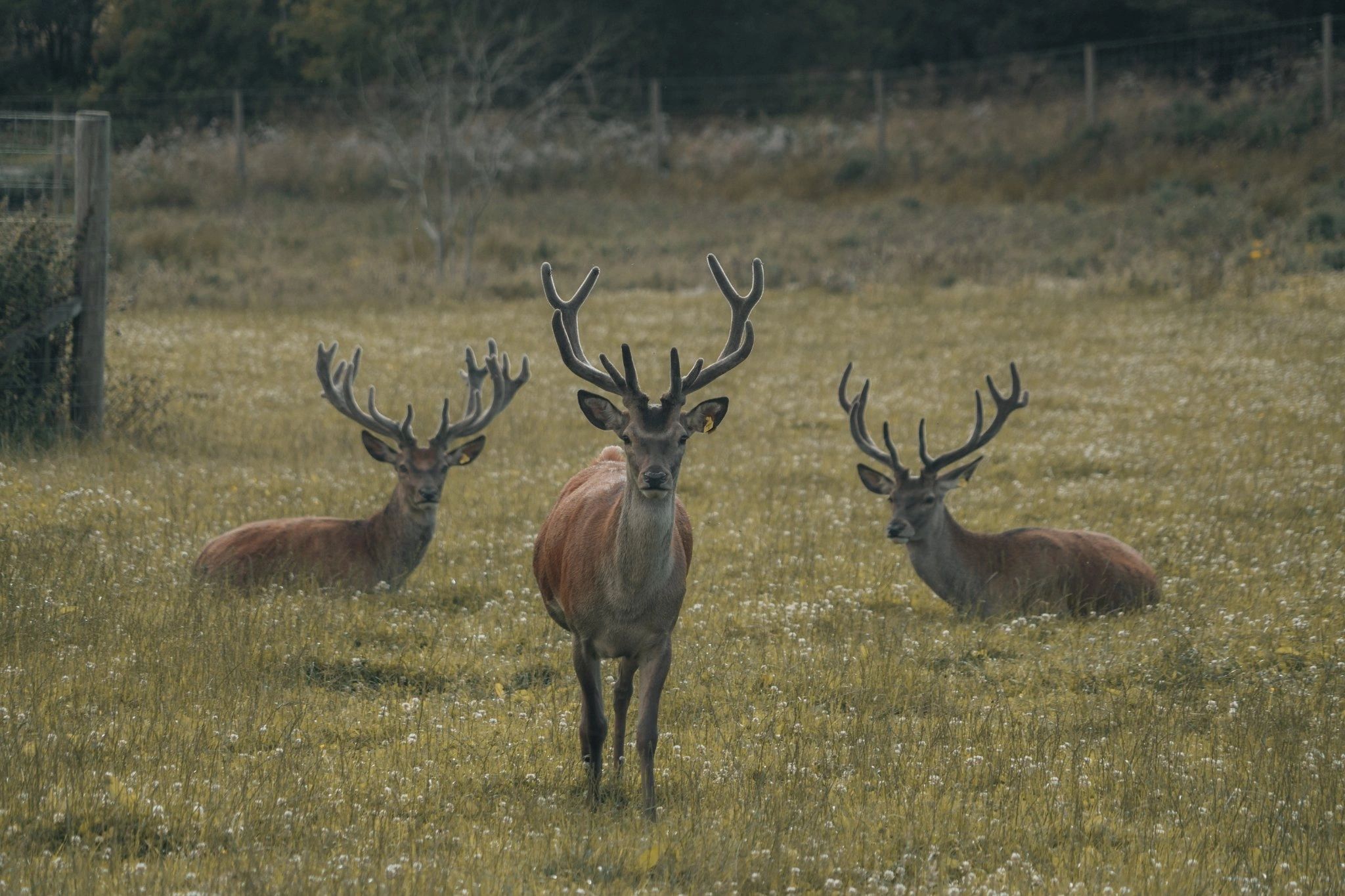 Janet and Willie's herd at Broadbog Farm, Tullynessle. The only commercial red deer farm in the Aberdeenshire region.
Janet and Willie run Tullynessle Deer Farm at Broadbog Farm near Alford — the only commercial red deer farm in the region. There are no guns involved. This is a guided farm encounter: you get close to the herd, you understand how they behave, and at the end you try the venison.
At £25 per person, it is family-friendly and accessible in a way that a full estate stalk is not. Children can join. No prior knowledge is required. What you get is proximity to an animal that, in the wild, you would typically see at several hundred metres through binoculars. The managed farm environment changes that entirely — you understand the animal's size, the mass of a mature stag's antlers, the texture and smell of the herd in a way that no hillside observation will give you.
The venison tasting at the end is not incidental. Wild venison from properly managed estates is among the most nutritionally sound, low-intervention red meat available in Britain. Tullynessle's is the version you can buy direct, understand the provenance of, and take home. If you want to cook it well: keep it simple. Venison haunch benefits from a marinade, but venison loin needs nothing but a hot pan and restraint with the cooking time.
For more farm animal encounters across the region, the animal encounters directory has a full listing.
Glen Tanar: Guided Stalking on 25,000 Acres
Glen Tanar Estate near Aboyne covers 25,000 acres of Royal Deeside, including ancient Caledonian pinewoods, heather moorland, and river valley ground that holds both red and roe deer in good numbers. The guided stalking here is what distinguishes it from Tullynessle — this is a genuine day on the hill with a qualified stalker, not a farm encounter.
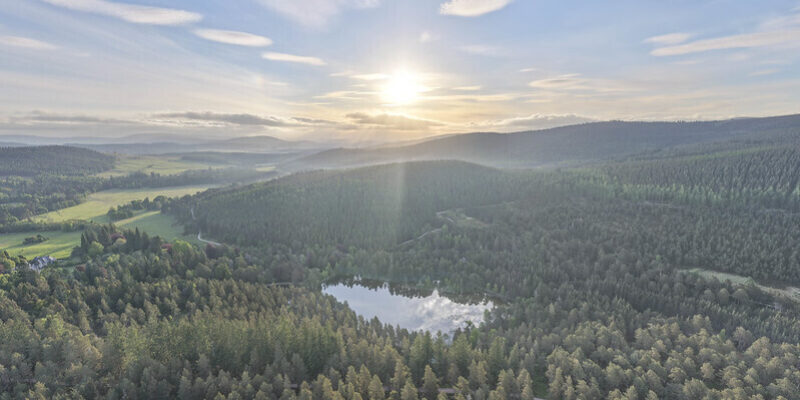 Glen Tanar from above. The estate encompasses ancient Caledonian pinewoods, open moorland, and the River Dee valley.
A stalked day is not what films suggest. It is primarily waiting, watching, and moving at the pace of the deer rather than yours. You will spend time glassing — scanning the hill with binoculars — before anything else happens. When you move, you move quietly and with the wind in your face, because red deer have exceptional noses and a faint shift in wind direction ends a stalk immediately. The crawling-through-heather portion is real but not constant.
Beginners booking a guided stalk at Glen Tanar should be reasonably fit — the hill work is not technical but it involves uneven ground, sometimes steep, sometimes wet, always without a clear path. The stalker manages the day; your job is to follow instructions and stay quiet. If you have never handled a rifle, the stalker will provide full briefing before any shot is taken.
Glen Tanar also offers salmon fishing on the Dee, horse riding through the estate's Caledonian pinewoods, and seven heritage self-catering cottages sleeping two to six. Combining a morning on the river with an afternoon stalk is the kind of day that the estate is specifically designed to support.
Invercauld Estate: The Full Season
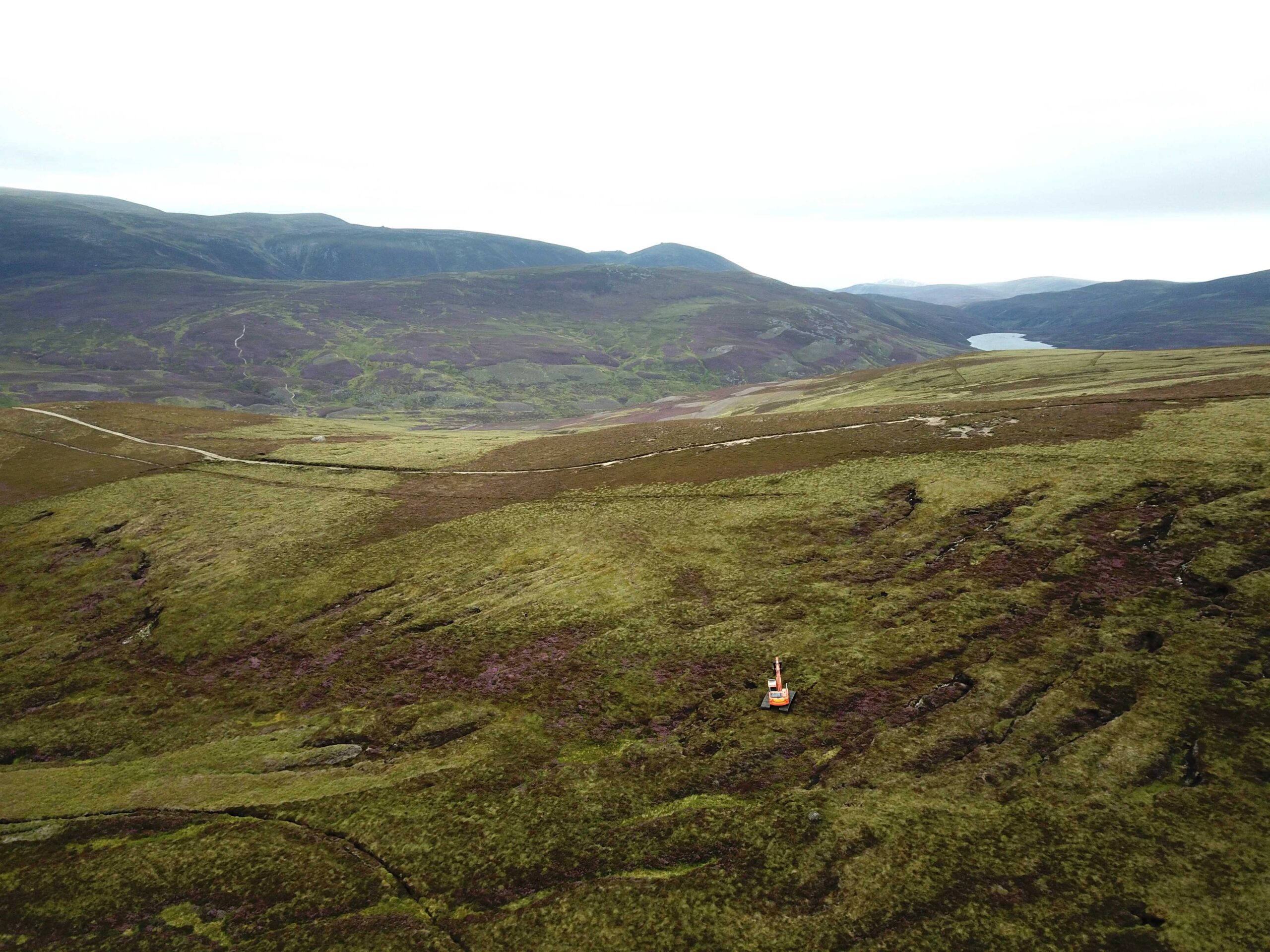 Invercauld Estate near Braemar. At 200 square miles, it is one of the largest private estates in the Cairngorms National Park.
Invercauld Estate near Braemar is a different proposition. At 200 square miles, it is one of the largest privately managed estates in the Cairngorms National Park and one of the most respected sporting addresses in Britain. The stag season runs from 1 July to 20 October; hind season continues through to February. Grouse shooting opens from 12 August on what the estate describes plainly as driven and walked-up ground. Salmon fishing on the River Dee runs from February through September.
The wildlife on this estate reflects what serious land management produces: red deer in numbers, wildcat (rarely seen, genuinely present), black grouse, golden eagle, red grouse. The land holds SSSI, SAC, and SPA designations — which is worth saying plainly, because it demonstrates that driven grouse moors and ecological designations are not mutually exclusive when the management is done properly.
The Rut in October
If there is a single argument for timing a visit to Aberdeenshire for deer, it is the stag rut in October. The sound of a red deer stag roaring across an empty glen at dawn is not something you encounter in many places. On estates like Invercauld, during the stag season's closing weeks, that sound is pervasive — competitive, raw, and completely unlike any wildlife encounter you'll have elsewhere in Britain.
The self-catering cottages at Invercauld overlook the River Dee. Waking up to that view during the rut, with stags audible from the hillside behind the cottage, requires no deer stalking experience whatsoever to appreciate.
The Ecological Argument
There is a framing problem with deer stalking that this article would be dishonest to avoid. The word "culling" sounds uncomfortable; "trophy hunting" sounds worse. Neither term captures what deer management in Scotland actually is.
Red deer in Aberdeenshire have no natural predators. Wolves were extirpated centuries ago. Without management, the population grows until it damages the habitat — overgrazing regenerating woodland, reducing biodiversity, and ultimately degrading the ecosystem that the deer themselves depend on. Properly managed culling is what maintains population levels that the land can support. On SSSI-designated ground like Invercauld, that management is not optional — it is an ecological obligation.
The field sports page covers stalking, shooting, and fishing across the wider Aberdeenshire directory, including estates not covered in this article.
What to Book and When
- Tullynessle Deer Farm — year-round, £25/person, advance booking recommended. AB33 8DD.
- Glen Tanar Estate guided stalks — stag season July–October, roe deer available across a longer season. Contact the estate directly via the Glen Tanar listing. Cottages available for multi-night stays.
- Invercauld Estate — full sporting seasons across stag, hind, grouse, and salmon. Self-catering cottages in Braemar for guests staying multiple nights. Book well ahead — the stag season fills early.
Aberdeenshire does not market this badly. It does not need to. Come in October if you want to understand what red deer actually are. Come in July if you want to learn stalking from the beginning. Come to Tullynessle with your family if you want to spend an hour in a field with something magnificent and go home with venison.
All three are valid. All three are the real thing.