"Whisky Farm Glamping in Aberdeenshire: Sleep on the Barley That Becomes Scotch"
Boutique Farm Bothies grows the barley that ends up malted into Glenlivet whisky. You can stay in a tin bothy surrounded by those fields, sit in a wood-fired hot tub, and watch the grain that's destined for the still dry in the Aberdeenshire wind.
Here is a specific fact about Boutique Farm Bothies at Newton of Begshill, Drumblade: the barley growing in the fields around the Barley Bothy is contracted to be malted for Glenlivet whisky. The grain you see from the bothy window — or hear being cut by the combine harvester at harvest in August or September — is on its way to become Scotch.
No hotel in the Speyside region can offer that. Most distillery visitor centres cannot either. The farm-to-glass connection that whisky marketing constructs in retrospect is, at Boutique Farm Bothies, a literal agricultural fact that you can observe from a wood-fired hot tub in a tin bothy in a barley field.
The Barley Bothy
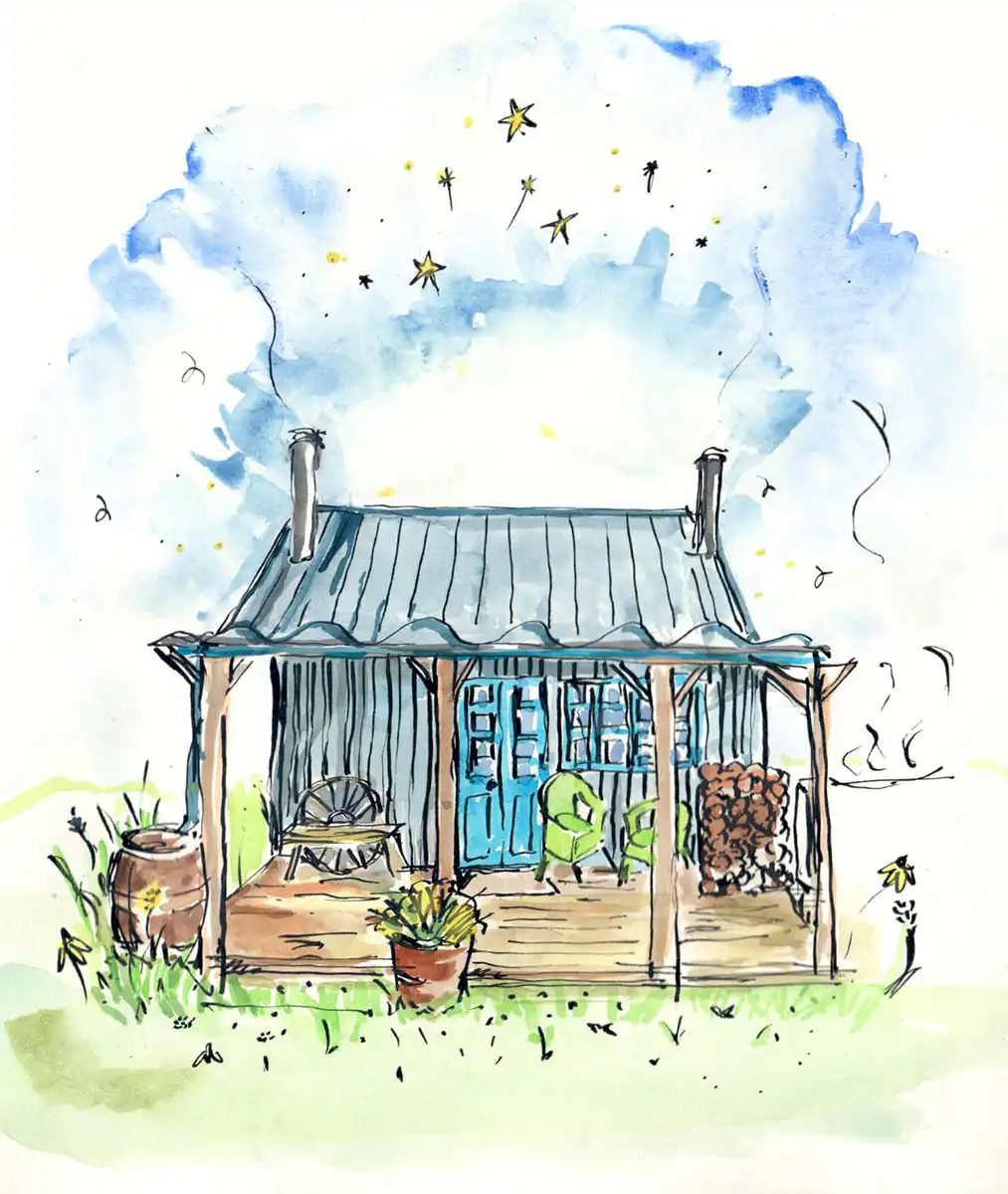 The Barley Bothy at Newton of Begshill. The tin cladding is not a design choice made in isolation — it reflects the agricultural buildings on the farm.
The Barley Bothy is a corrugated tin cabin set directly in the barley fields. Jane and James Foad have three bothies on the farm — Barley Bothy, Sheep Shed (which overlooks the flock and has a wood-fired hot tub), and Dairy at Denend (at the edge of the Cairngorms, the most remote of the three). The Denend Farmhouse sleeps eight for larger groups.
Channel 4's Amazing Spaces featured the operation; it later appeared in World's Most Secret Hotels. These television credits function as a useful shorthand for "designed by people with genuine aesthetic consideration" — the bothies are not glamping pods with a rustic paint job. They are considered structures that sit correctly in a working agricultural landscape.
Prices from £129 per night. Fresh produce hampers are available from the farm's strawberry polytunnels and kitchen garden. The detail of arriving at a bothy with a hamper from the farm you're sleeping on has a logic to it that the standard hotel minibar does not.
Harvest Timing
 The barley fields in summer. Harvest typically runs August–September, when the combine works around the bothies.
If you want to understand the farm-to-bottle story viscerally rather than abstractly, book in August or September. The barley will be at full height in August, gold and heavy in the head. The combine will come — possibly while you're there — and the field around your bothy will change from standing crop to stubble in a matter of hours. This is not a disruption to the stay. It is the most vivid demonstration available of what whisky distilling actually starts from.
The Dairy at Denend is the Cairngorms option — quieter, more remote, a different register from Barley Bothy.
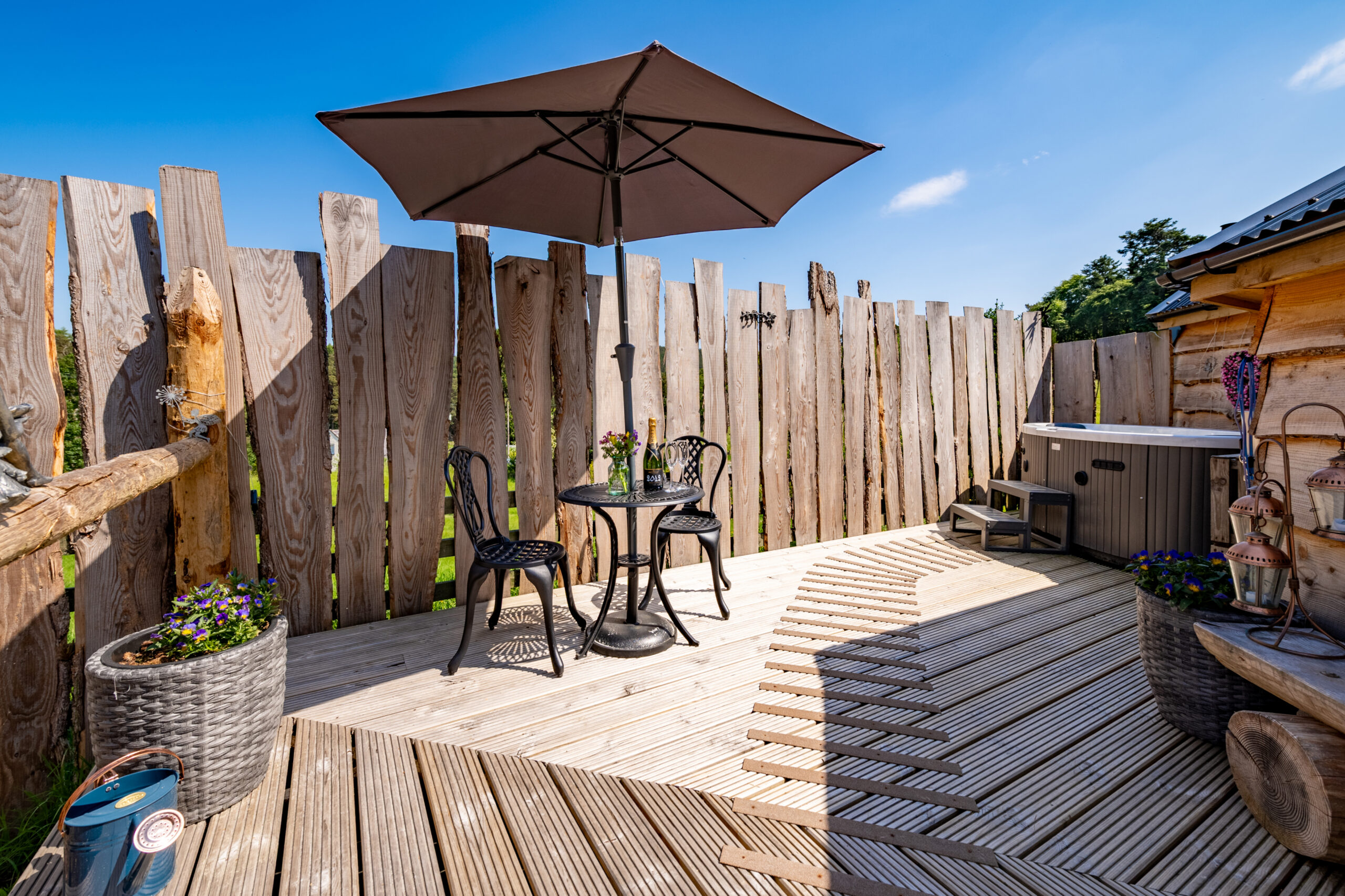
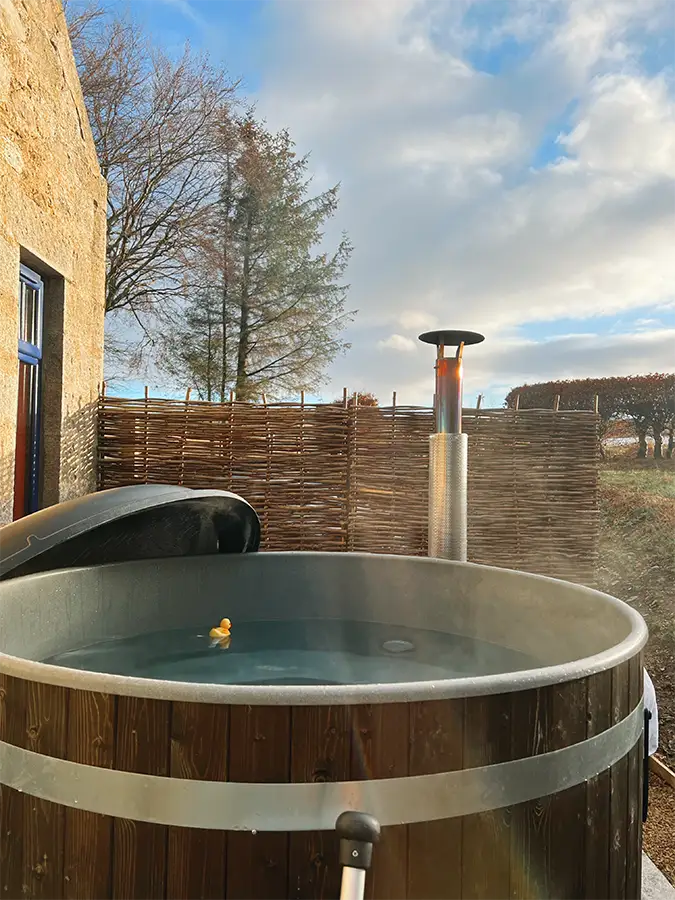 The wood-fired hot tub. After a day visiting distilleries, this is where the evening goes.
Hillhead Hideaways: The Speyside Whisky Trail Base
Hillhead Hideaways in the Glen of Newmill near Keith is run by Adam Wright and Victoria Gardiner. Four luxury glamping pods, each with its own hot tub and BBQ house. Goats, cattle, and sheep on the farm. Dog-friendly.
The location makes this the most useful base for a structured Speyside distillery itinerary. Glenfiddich, Balvenie, Glenlivet, and Tamnavulin are all within 30 minutes, which means a two-day distillery programme is straightforward without long driving stages.
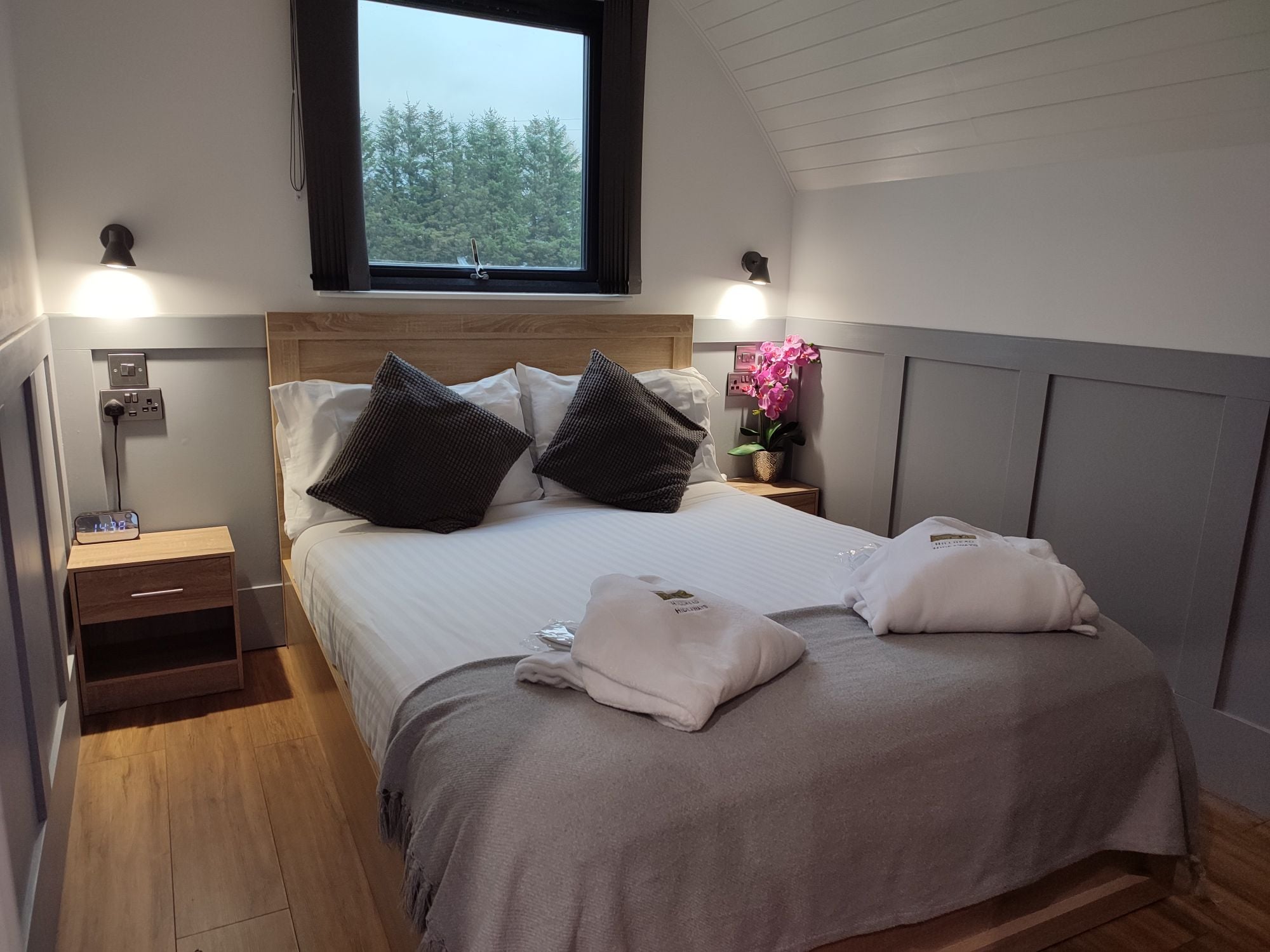 Hillhead Hideaways in the Glen of Newmill. The Speyside Whisky Trail runs through this valley.
A Two-Day Speyside Distillery Structure
A working itinerary from Hillhead:
Day One: The Dufftown Cluster. Glenfiddich and Balvenie are 200 metres apart in Dufftown — the only distilleries in Scotland sharing a water source (the Robbie Dhu spring) and operational proximity that lets you do both in a single morning/afternoon. Glenfiddich offers the more theatrical tour; Balvenie's Warehouse 24 experience is smaller and more detailed. Allow three hours for both.
Day Two: Upper Strathavon. Glenlivet and Tamnavulin are further south, up the A939 towards Tomintoul. Glenlivet's visitor centre is polished and high-volume; Tamnavulin, by the River Livet, is a smaller operation. The drive between them on the upper Strathavon road is worth doing slowly.
What makes this itinerary better from a farm base than a hotel in Aberlour: you return to an environment that smells of grain and livestock, you sit in a hot tub looking at working farmland, and the connection between the agricultural landscape and what is in the glass has some physical reality. The distillery tour gives you the process. The farm gives you the raw material.
The Dava Way walking trail passes near Hillhead for non-distillery days. Dolphin spotting on the Moray coast is 45 minutes north.
Sweet Donside Cabins: The Quiet Cairngorms Option
Sweet Donside Cabins in Strathdon operates at a quieter pitch than either Boutique Farm Bothies or Hillhead. Five cabins with wood-fired hot tubs in the upper Don valley, with the Lecht ski area 20 minutes away and Balmoral 30 minutes to the southeast.
 Sweet Donside Cabins, Strathdon. The upper Don valley gives access to Cairngorms walking, the Lecht, and distilleries on the Donside whisky route.
The distillery access here follows the upper Donside route rather than Speyside proper: smaller operations, less tourist infrastructure, a different version of the same landscape and tradition. This suits visitors who want to avoid the polished visitor-centre experience and spend more time driving rural roads between working distilleries.
For winter visits, the Lecht makes this the most versatile option in the group — a cabin stay with skiing, Cairngorms walking on non-ski days, and distillery visits in the evenings.
What Makes Farm-Based Whisky Tourism Different
The distillery visitor centres are professionally run and genuinely informative. They are also, by definition, inside the distillery. They begin at the mash tun.
The barley — the grain, the field, the agricultural supply chain that starts the entire process — is invisible in most whisky tourism. At Boutique Farm Bothies, it is literally what you are sleeping next to. At Hillhead Hideaways, the farm context keeps the agricultural origins of the spirit visible even when you're spending the day inside a still house.
Scotch whisky is a food product with an agricultural origin. The farm stays in this article give that origin a physical presence that the distillery experience alone cannot.
Explore more farm experiences across Aberdeenshire and Speyside on the farm tours page.